When you help a client, you often pay official fees to a government authority and then rebill them, for example a trade licence fee, a visa or immigration fee, or a department charge. That money is collected on the client's behalf and passed straight to the authority. It is a disbursement, not something your firm earns. IzzyTap calls this government pass-through and always keeps it apart from your real income.
Where it comes from
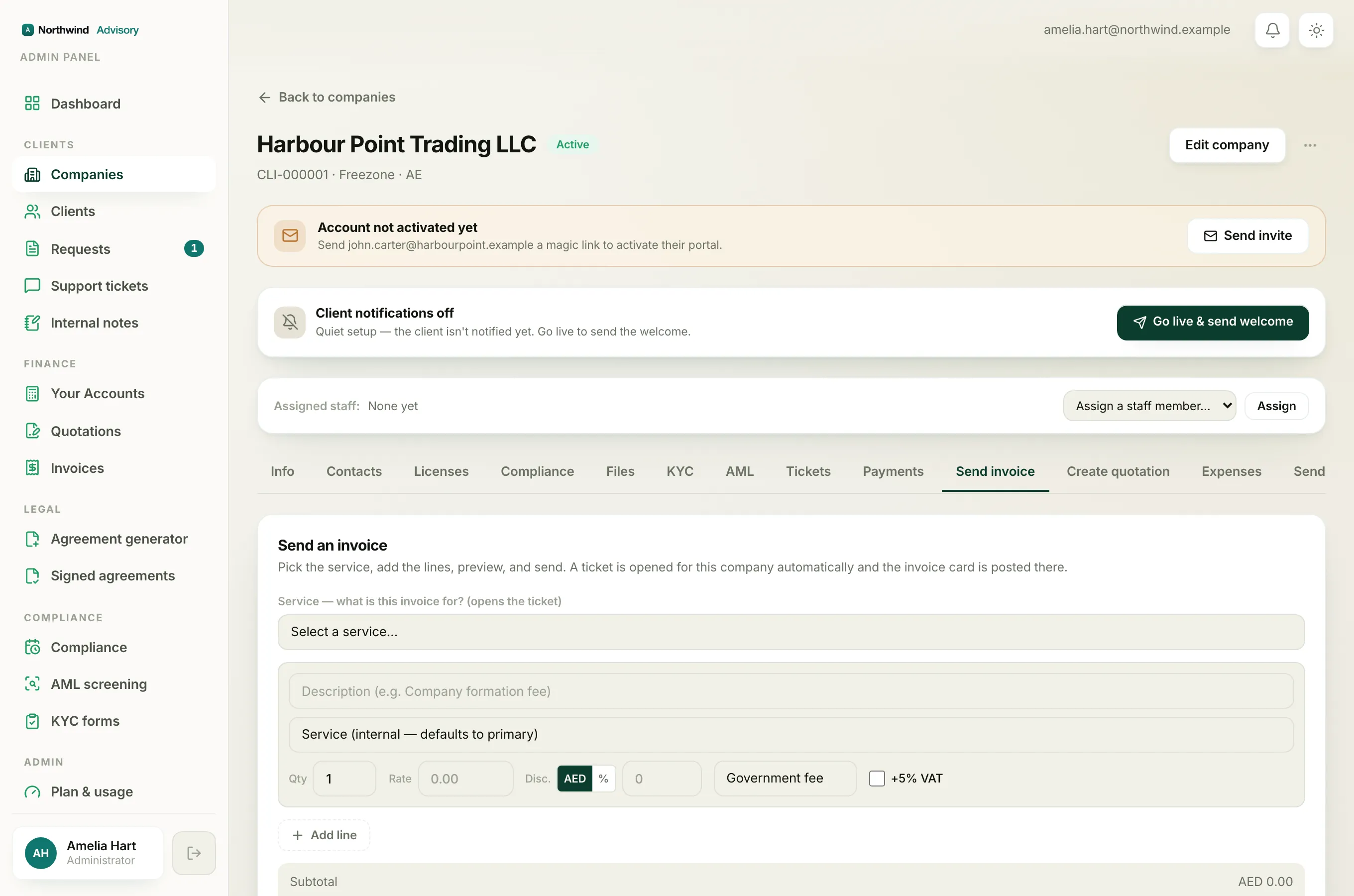
Pass-through is decided by the line type you choose when you build an invoice or quotation. A line marked as a Government fee is treated as pass-through. A line marked as a Service charge is your own professional fee, which is your revenue and carries 5% VAT. See the invoice line types explained for how to pick the right one.
Important
Government fees are not your income and do not carry your VAT. Putting an authority fee on a Government fee line, rather than a service charge, keeps both your revenue and your VAT correct.
How it is shown separately
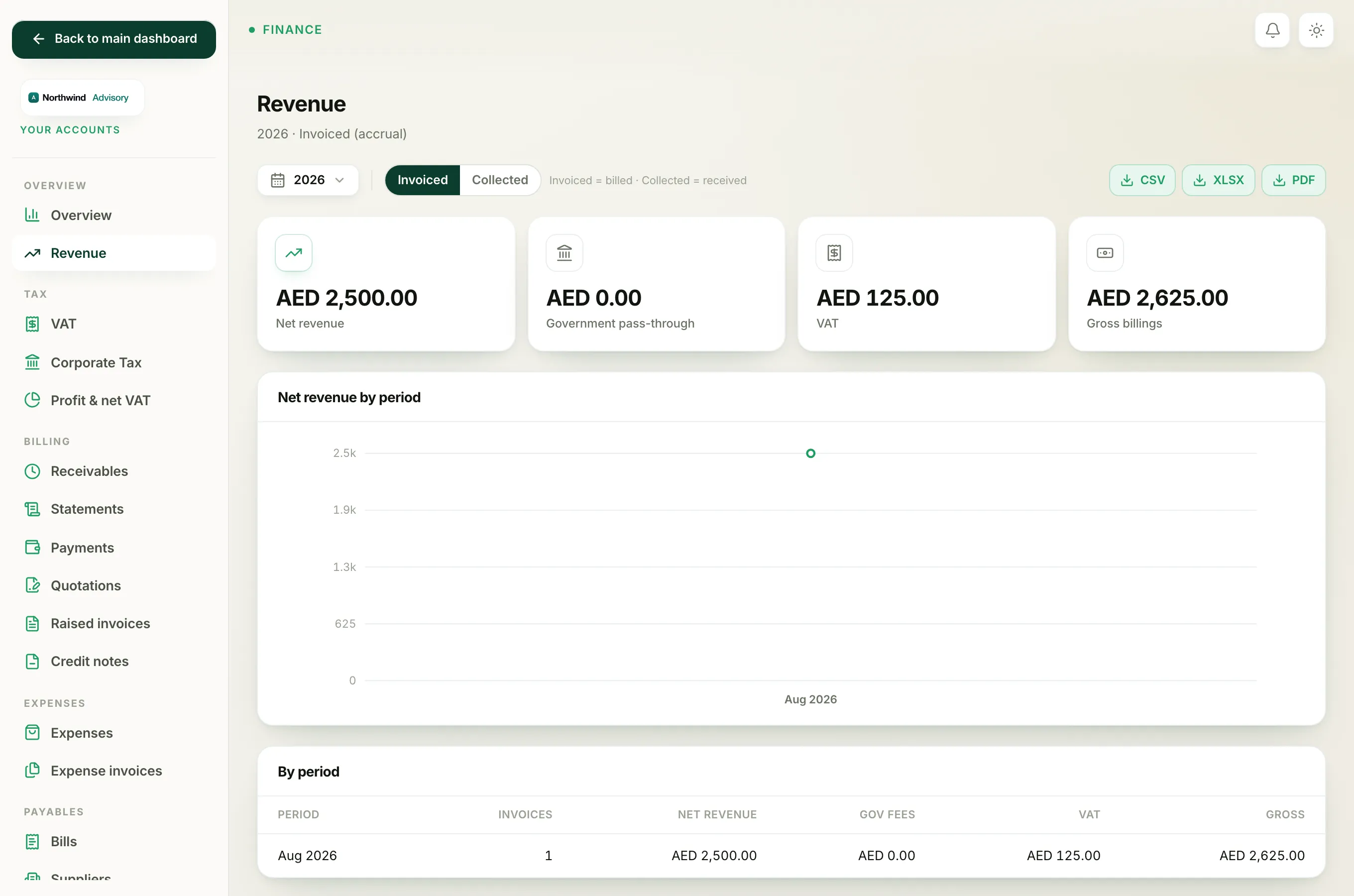
Across your accounts, pass-through is never mixed into your earnings:
- Net revenue is your professional fees only. Government fees are excluded.
- Government pass-through is shown on its own card and column so you can see the total you handled on behalf of authorities.
- Gross billings is the full total, that is your net revenue plus government fees plus VAT. This is what the client was billed in all.
You can see all three side by side on the Revenue report.
Why it matters
Keeping pass-through out of revenue means your income figure is honest. A month where you paid a large licence fee for a client does not look like a big earning month. It also keeps VAT right, because you charge VAT on your own service fees, not on the government fees you are only passing on. For the same reason, the revenue chart tracks net income only and leaves the volatile government fees out.