What the risk level is
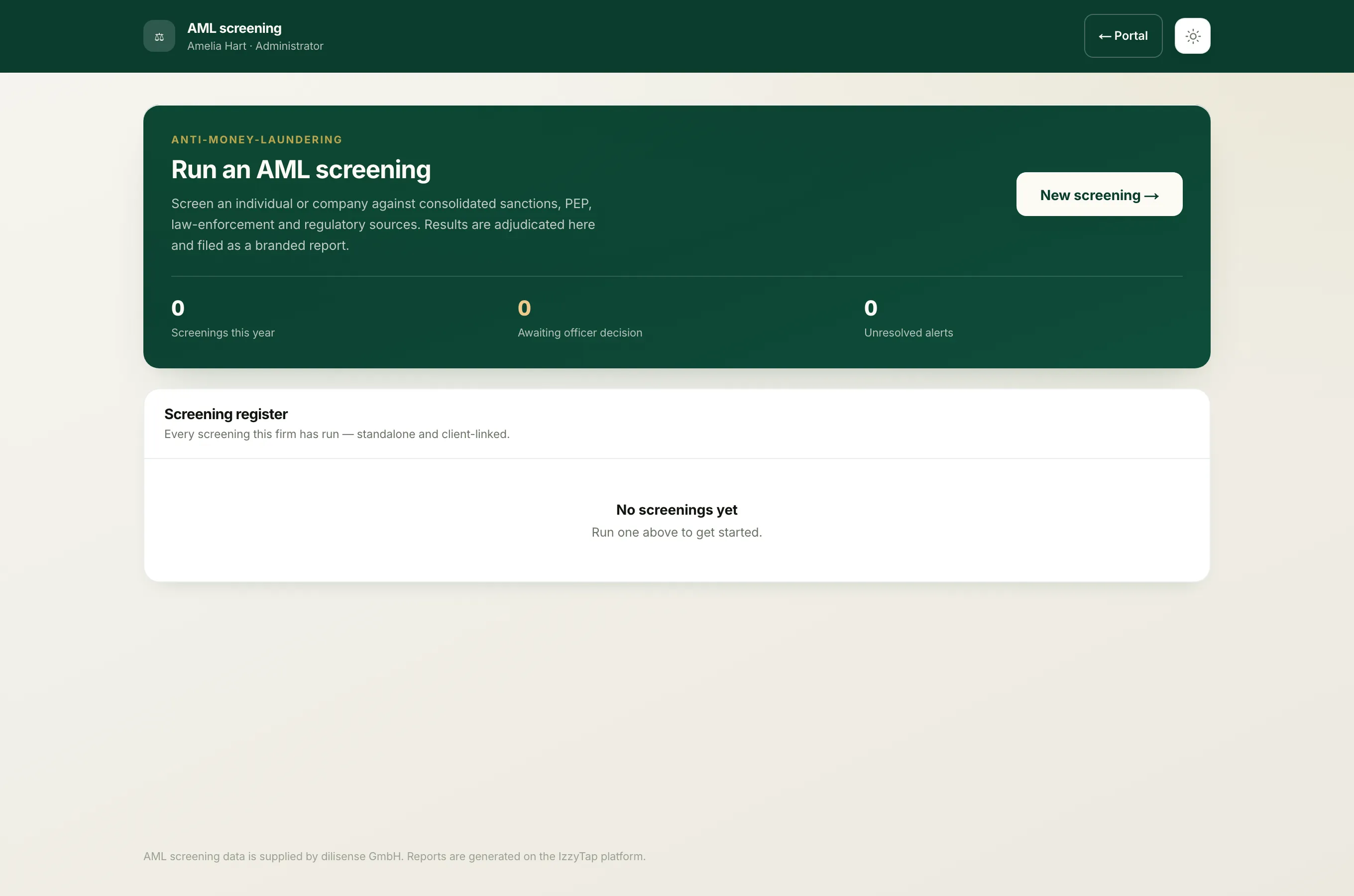
Every screening carries one overall risk level: None, Low, Medium or High. It is a plain summary of how serious the results are, so you do not have to read every alert to know whether a case needs attention.
You see it on the screening page.
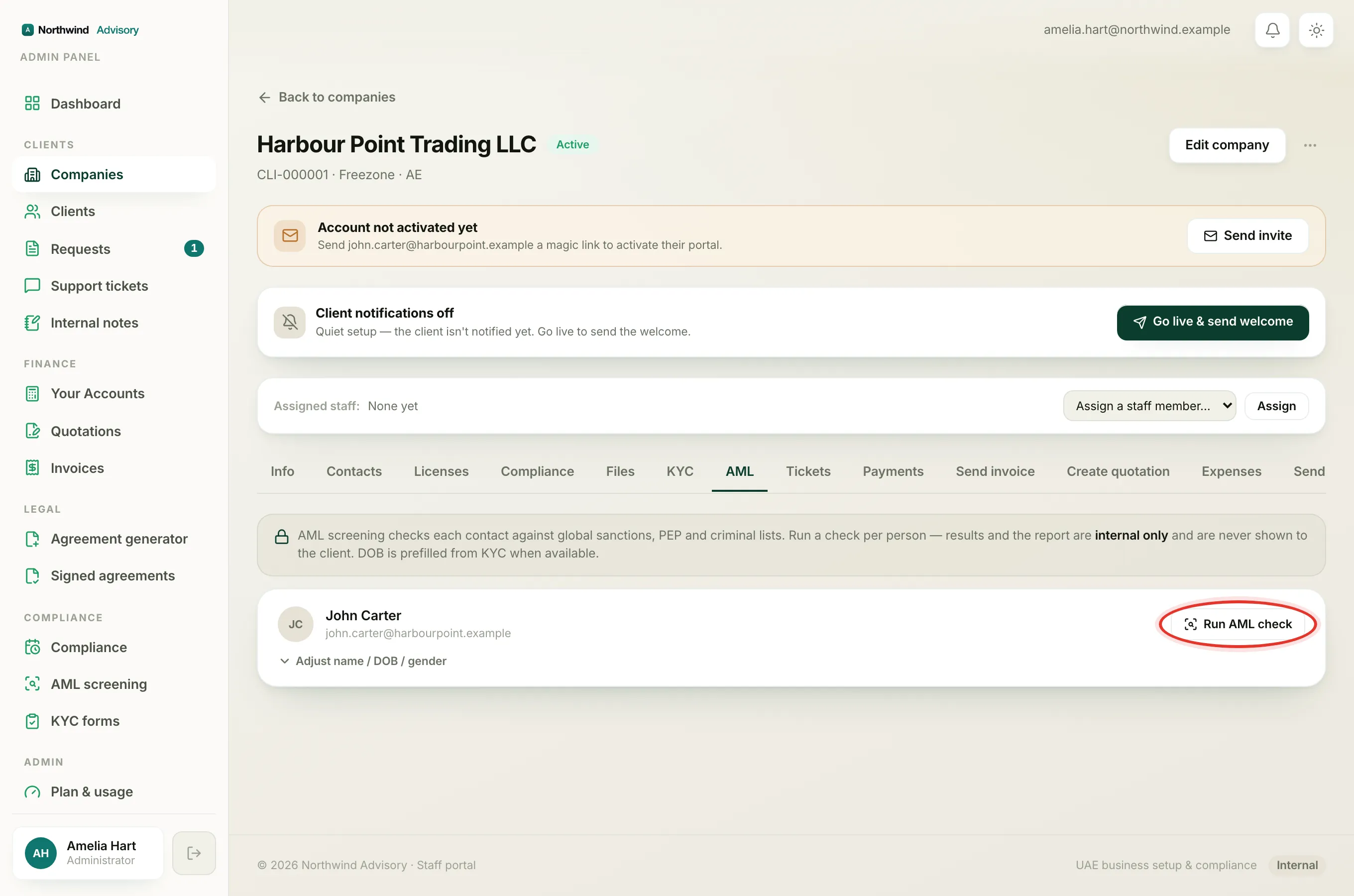
- Log in to your workspace.
- In the left menu, under Compliance, click AML screening.
- Open a screening.
- Look at the middle tile, headed Adjudicated. It shows the risk level (or Clear when nothing was found).
How the level is decided
IzzyTap does not guess the risk. It follows a fixed rule based on the kind of match found and any adverse media. This is deterministic compliance logic, so the same results always give the same level.
- High if the screening returned a sanctions or criminal match, or if adverse media was found in a serious category (terrorism, financial crime, organized crime or violent crime).
- Medium if the person is a PEP (politically exposed person) but not sanctioned or criminal, or if there was any adverse media in the regulatory or political category.
- Low if there were matches but only of the lowest kind, with no sanctions, criminal, PEP or media concern.
- None if nothing was found at all.
Why it is not the alert count
The number of alerts and the risk level answer two different questions. The alert count tells you how many records the name looked similar to. The risk level tells you how serious those records are.
A very common name can return hundreds of alerts that are all different people, and still be Low or Medium risk. A rare name can return a single alert that is an exact sanctions hit, and that one alert makes it High. So a big alert count is not the same as a big problem, and a small count is not the same as a clean result.
Note
The risk level is a starting point for your judgement, not the end of it. It reflects what the databases and news search returned. You still decide each alert and record why. See The five alert dispositions, and which one to choose.